- 1/1
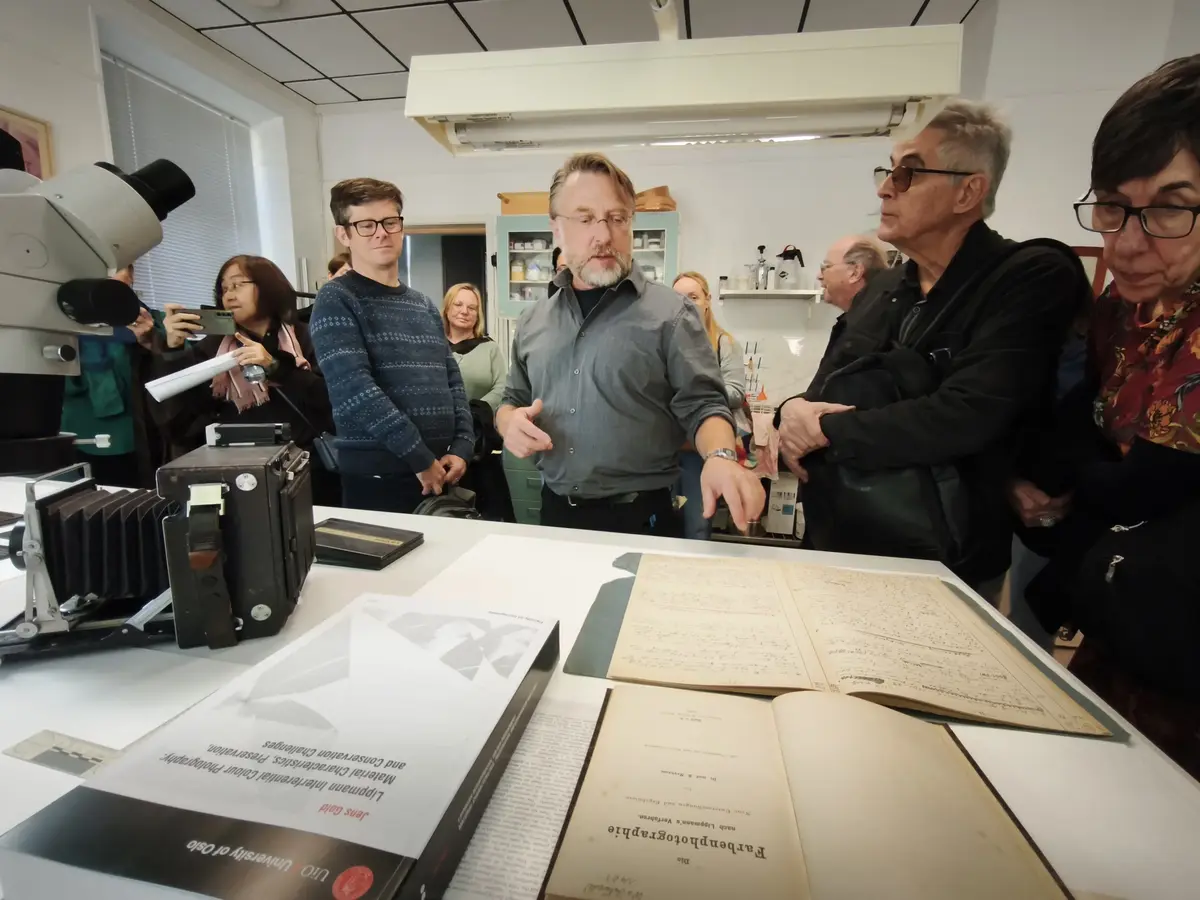
Jens Gold presenting his research to ICOM-CC members. Photo: Guro Linskov
Visit the Exhibition by Appointment
The Lippmann-exhibition can be visited upon request, send your inquery to Dr. Jens Gold jens.gold@preusmuseum.no
In 1891 the first true and permanent colour photographic technique in the history of photography was presented by the French physicist Gabriel Lippmann (1845-1921). Almost immediately after the presentation, several photographers and scientists started to experiment and produce images with Lippmann colour.
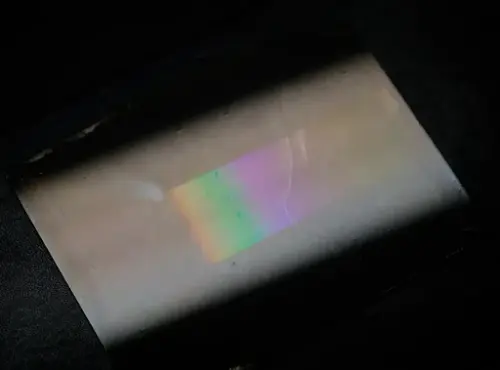
Unlike any other early and modern examples of colour photography, it does not require dyes or pigments to generate colour but depends on the standing wave phenomenon of light like the colours of a soap bubble, a butterfly wing or mother of pearl. Looking at the documented activity of photographers and the historical literature, several thousand Lippmann interferential colour images must have been produced around 1900. Today, only a few institutions and collectors worldwide possess original examples of these rare colour images. The photographic colour technique appears in a variety of conditions and presentation forms which highly affect their vulnerability, permanence, and viewing properties.
- 1/1
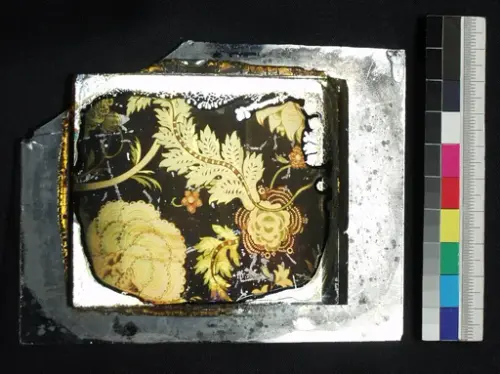
Lippmann process, also known as interference colour photography. Ana Gonçalves | Hans Lehmann
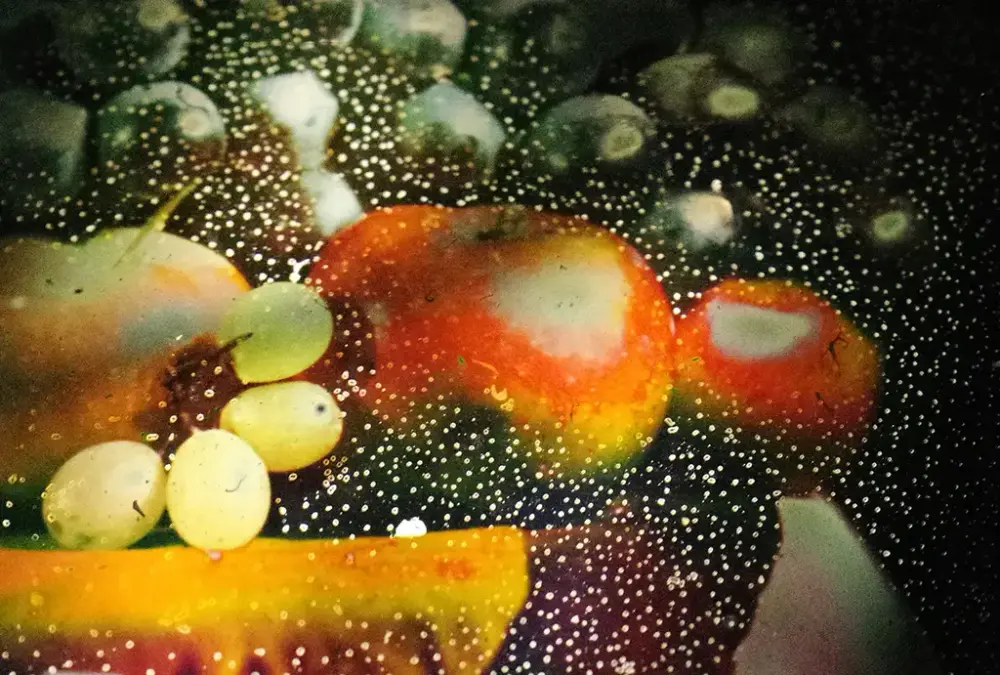
The Preus Museum has a considerable collection of fourteen unique Lippmann colour plates made by two key pioneers: Richard Neuhauss and Hans Lehmann. In addition, a unique historic group of books, papers and objects concerning the Lippmann process is part of the collection. This group of objects build the basis of a recent four-year PhD research project, started in the summer of 2021.
The project aimed to investigate Lippmann colour in terms of its materiality, history and its preservation and conservation challenges. The legendary interferential colour photographs by Richard Neuhauss and Hans Lehmann, are in focus of the presentation to be held. It will also give a practical hands-on introduction to the technology, history, presentation, and preservation challenges of Lippmann colour plates. Rare examples of interferential colour plates as well as replicas, materials, tools, and technology made and used during the research, will be shown during the presentation.
- 1/2
Colour Lippmann colour spectrum Jens Gold, Preus Museum - 2/2
Lippmann process, also known as interference-based colour photography Richard Gustav Neuhauss | Jens Gold