They were different in temperament - Marie outgoing and fearless, Bolette discreet and artistic - together an unbeatable duo who, through their partnership, showcased female entrepreneurship and solidarity with marginalised groups.
Bolette and Marie can be said to represent the emergence of modernity in Norway, with liberation projects in many areas. Industrialisation was in full swing, and steam engines made it easier and more efficient to travel, both on land and sea.
The photographic medium freed art from naturalistic representation, and science shed light on questions that had previously been answered by the church. It was a time when truths and established authorities were questioned, workers embraced socialist ideas for a more just working life and established power structures were challenged.
- 1/1
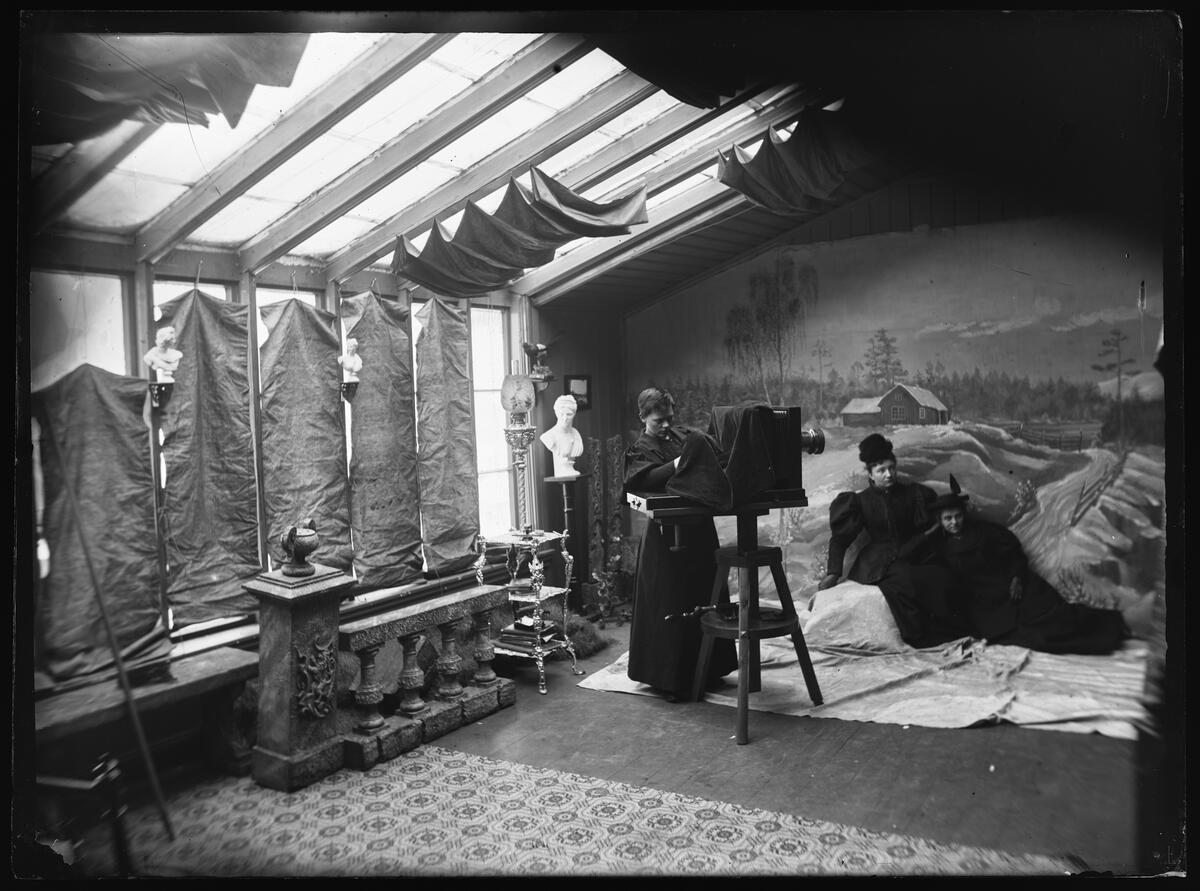
Berg & Høeg, From the studio in Horten. Marie is behind the camera, Bolette is probably behind the other camera, 1895–1903. Digitized from glass negative. Preus Museum collection.
Importantly, it was a time of female awakening, women desired liberation from fathers, husbands, and childbirth, and sought the opportunity to acquire knowledge on par with men. Particularly within the bourgeoisie, women were relegated to an existence where fathers and husbands had control over their lives. Marriage was considered an economic alliance, but along with the romantic currents of the time followed a demand that love should also have significance in life.
Camilla Collett's novel Amtmandens døtre (“The District Governor Daughters”) from 1854-55 precisely addressed the tragic aspect of loveless alliances and became a symbol of women's struggle for independent opportunities. Collett's significance for Bolette and Marie is confirmed by the fact that her portrait was displayed in their shared home, alongside other prominent free thinkers such as Ibsen, and Bjørnson, as well as pictures of their own family.
- 1/1
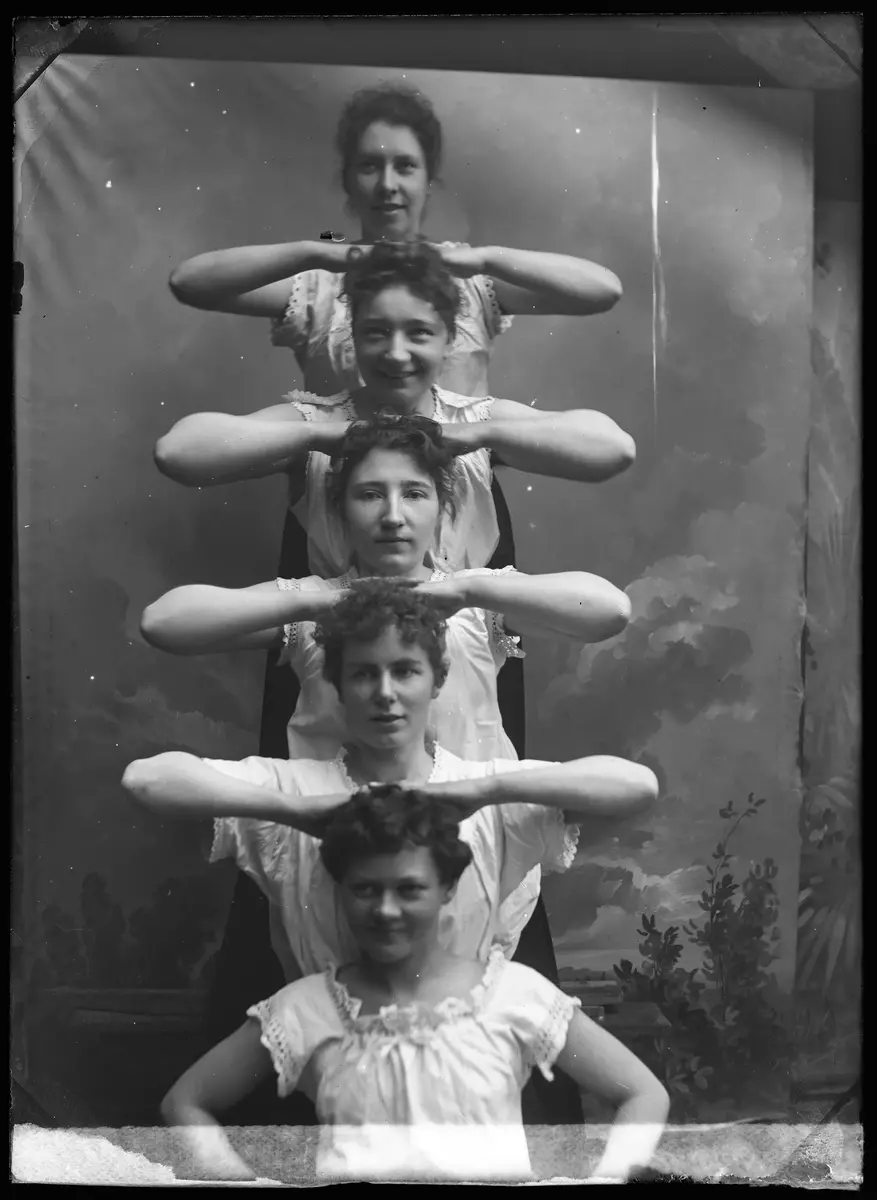
Berg & Høeg, Play in the studio. From the bottom up: Marie Høeg, Trine Ulrichsen, Bolette Berg, Bolette's sister Ingeborg and Julie Anthonsen, 1894-1903. Digitized from glass negative. Preus Museum collection.
Bolette and Marie were two women who, both through political activism and their business practices, demonstrated that women CAN. They ran a photography studio and later an art publishing house. Marie formed associations that addressed women's political issues and participated in the public debate both from the podium and in newspapers.
Both women worked to combat tuberculosis and promote peace, as well as advocating for women's paid participation in society. They were part of the first major wave of advocates for gender equality in Norway during the transition from the 19th to the 20th century.
- 1/1
Berg & Høeg, Marie with her brother Karl, 1894–1903. Digitized from glass negative. Preus Museum collection.
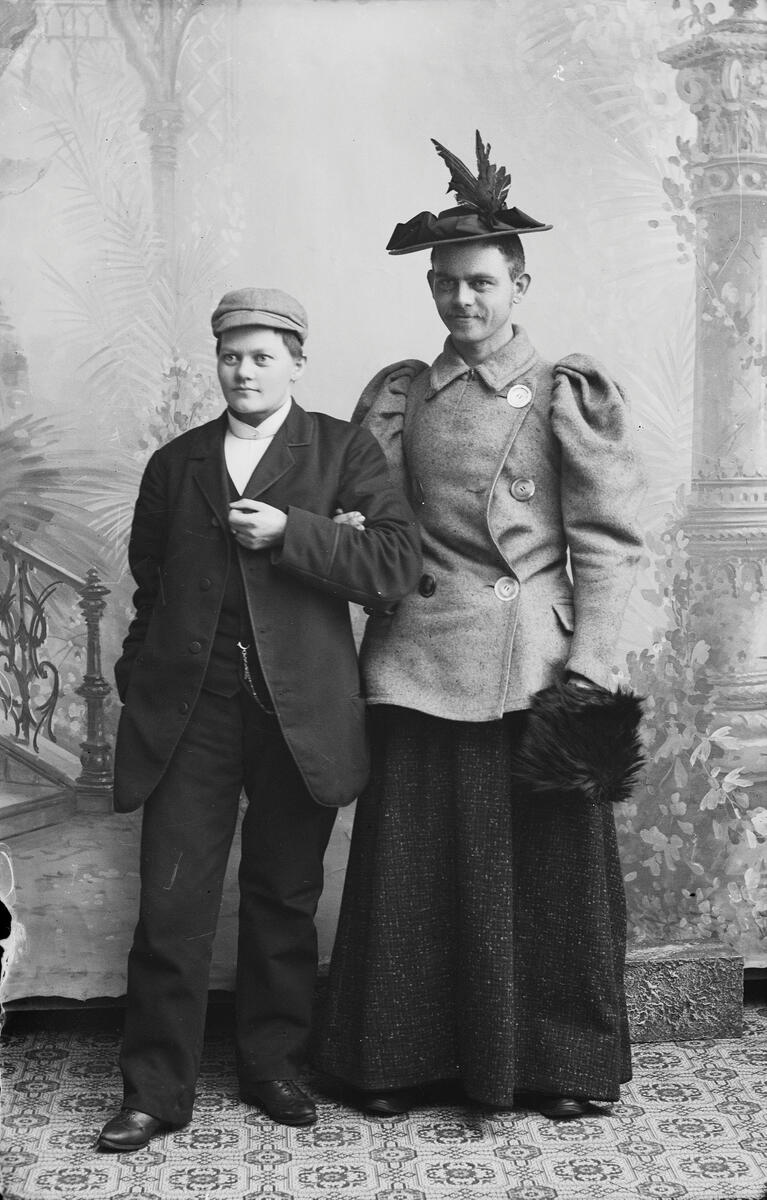
Marie Høegh and Bolette Berg had their firm Berg & Høgh's Kunstforlag A/S, known among postcard collectors, and their work Norske Kvinder (“Norwegian Women”), published in 1914, is still considered a reference work. The Horten Discussion Society, founded by Marie in 1896, was one of the first discussion societies for women established in Norway, and the only one that still exists to this day.
The private images
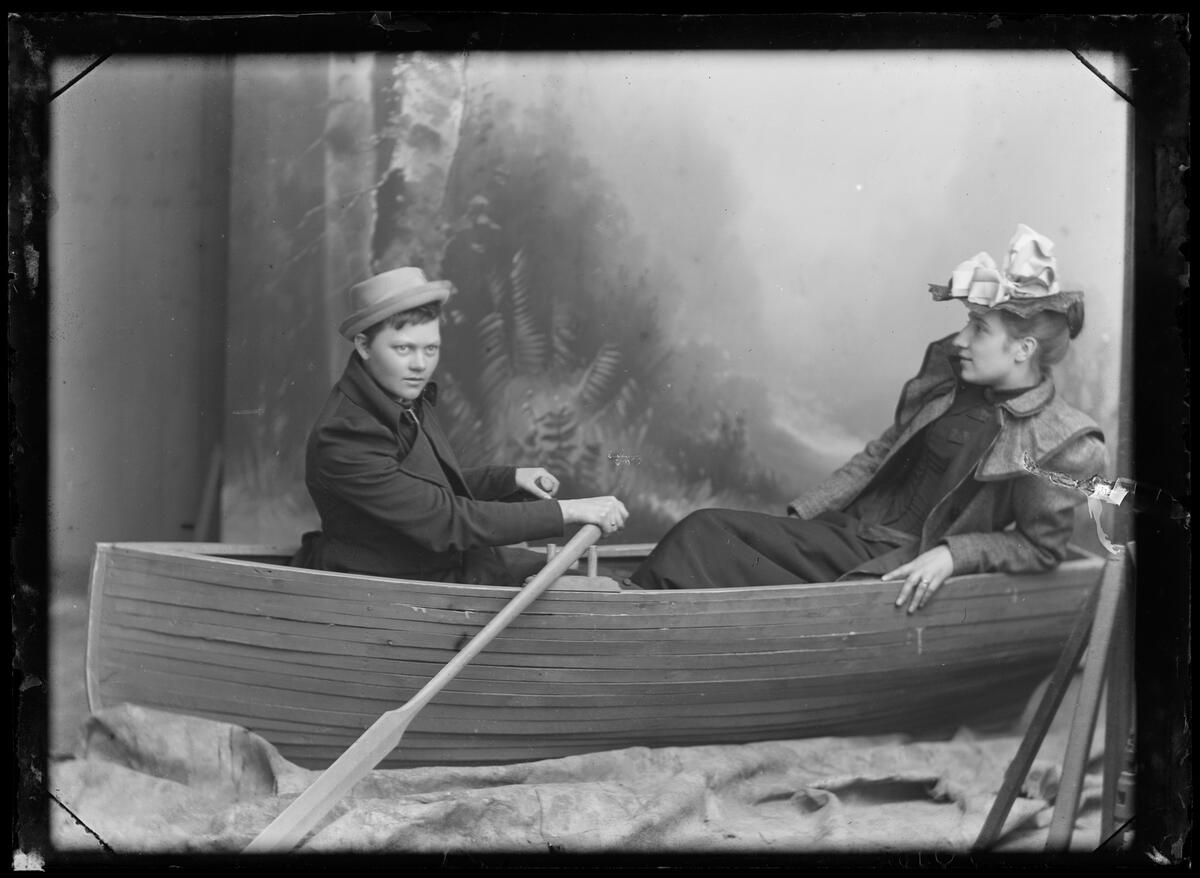
However, it is the approximately 60 negatives in boxes labelled Private left behind by the two women, that have given Bolette and Marie a new, seemingly eternal life. These images, taken while the two were in their twenties and working as photographers, depict their playful antics in front of the camera with friends and siblings.
Over the past decade, they have brought Berg & Høeg international fame. Freedom-seeking individuals love these lively motifs; they have become symbols of liberation projects of all kinds, whether it be the fight for women's rights, homosexual love, or non-binary identity affiliations.
Read the full story by clicking through the catalogue "Bolette&Marie" in the link below
- 1/1
Berg & Høeg, Water group, Miss Höegh, Bolette Berg [inscription on negative envelope], 1894–1903. Digitized from glass negative. Preus Museum collection.